
Our Wildlife-Rich Habitat Creation and Restoration Fund provides funding for projects that create new or restore degraded habitats, contributing to landscape character and nature recovery.
We are inviting partner organisations to share and discuss ideas for potential projects to be delivered within each of the next three years.
Where does the funding come from?
The capital allocation has come from Defra, as part of the government’s Environmental Improvement Plan and 30by30 targets.
Funding for 2026/27 has been approved, along with indicative funding for 2027/28 and 2028/29, allowing the ‘pipelining’ of suitable projects to be delivered until March 2029.
What habitats does the fund cover?
The relevant habitats for creation within Cranborne Chase include:
- Lowland calcareous grassland
- Lowland meadows
- Coastal and floodplain grazing marsh
- Ponds
- Wet woodland
- Mixed deciduous woodland
- Wood pasture
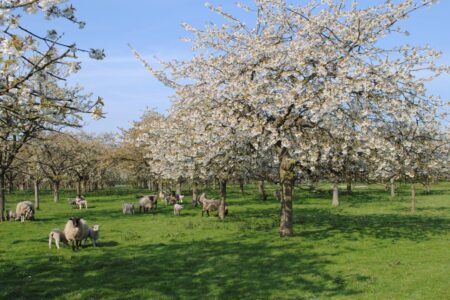
- Traditional orchards
- Hedgerows
- Scrub mosaics
The relevant habitats for restoration within Cranborne Chase include:
- Freshwater habitats affected by pollution, physical modifications or damage, impacted hydrological regimes and invasive and non-native species.
- Plantation on ancient woodland sites where less than 70% native broadleaf species present.
How are the projects delivered?
Projects can be delivered wholly or in-part by partner organisations and landowners.
Projects will be planned, delivered, maintained and reported using the existing Farming in Protected Landscapes (FiPL) policies and procedures.
Do you have a project idea?
If you have a project idea, fill in our Expressions of Interest form and return it to lindanunn@cranbornechase.org.uk.
Funding is competitive so will be allocated on a first-come, first-served basis, with preference given to ambitious, high-value projects that enhance landscape character and offer match funding.